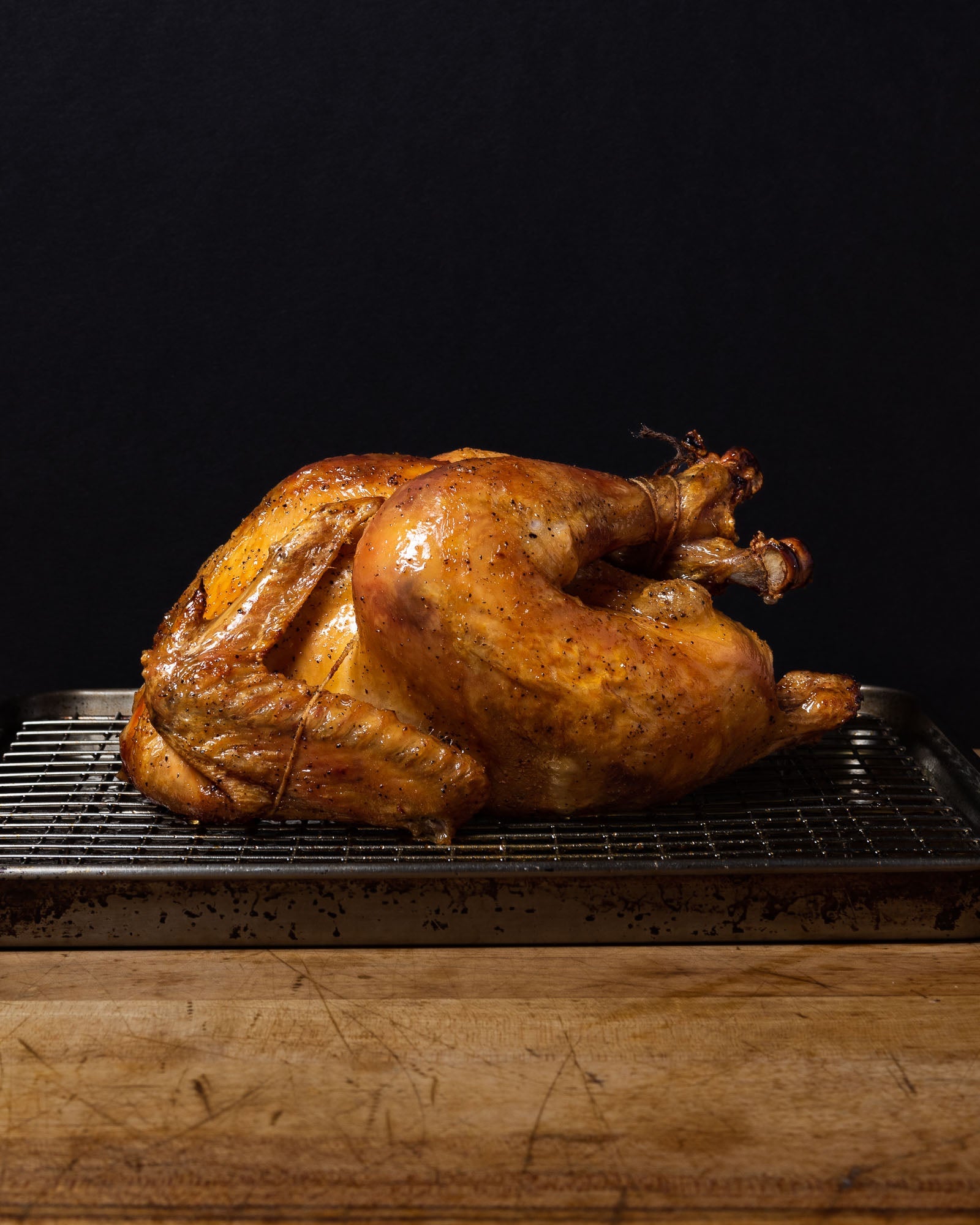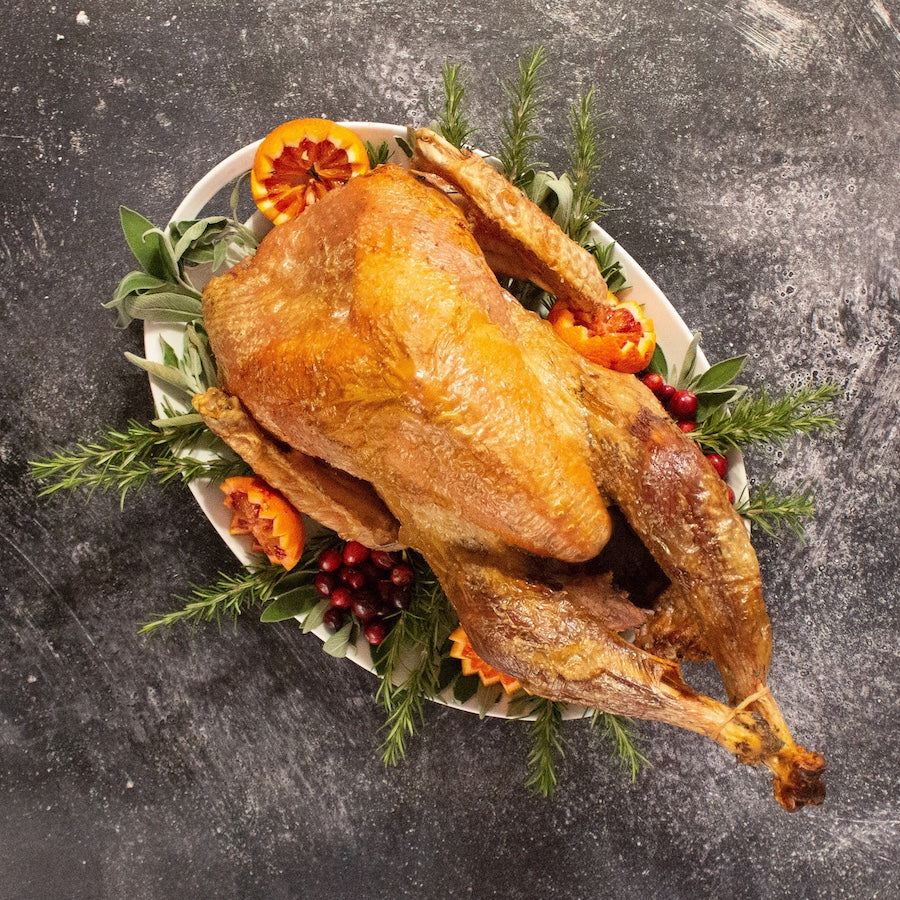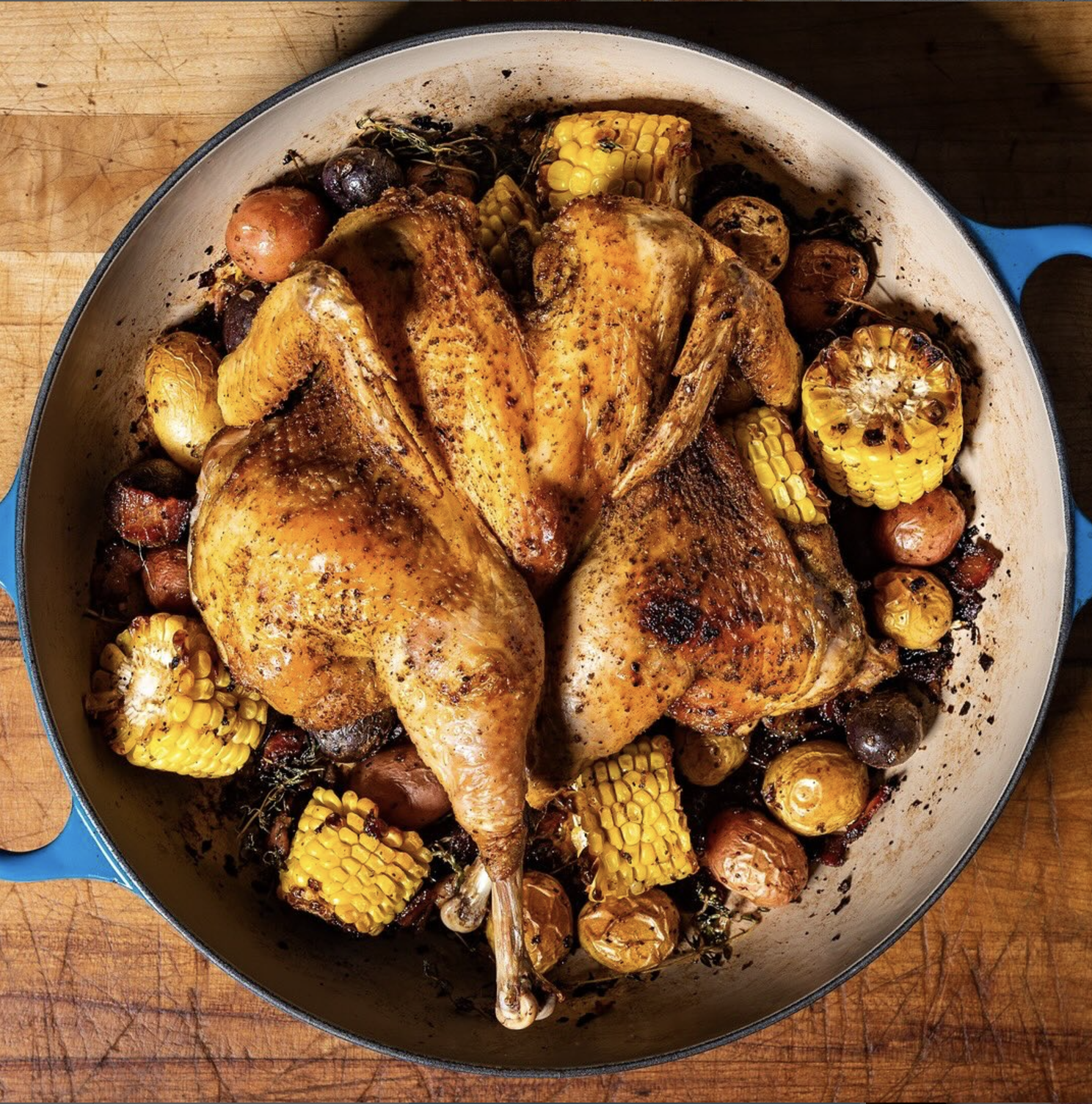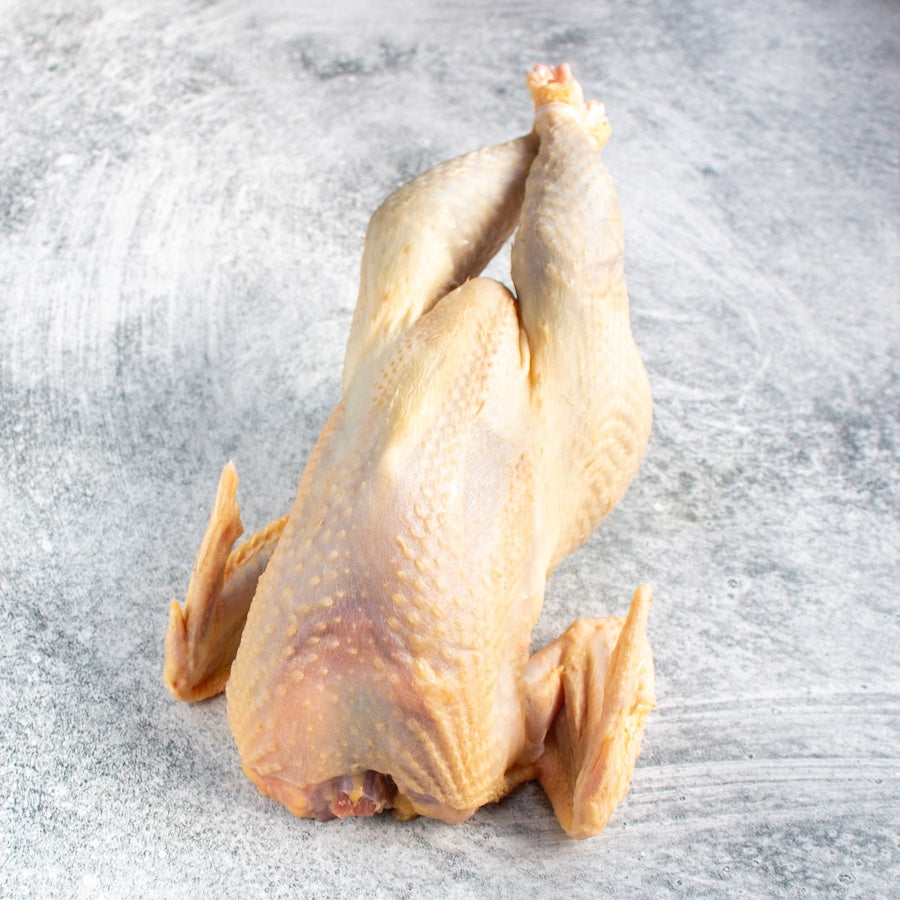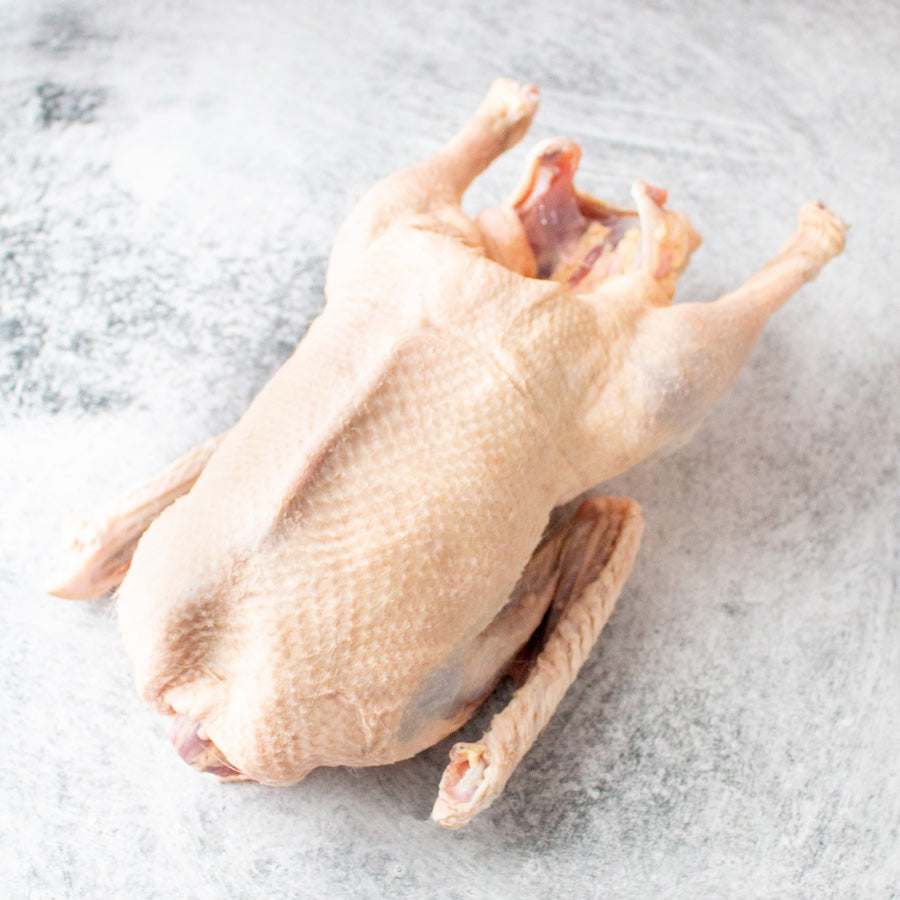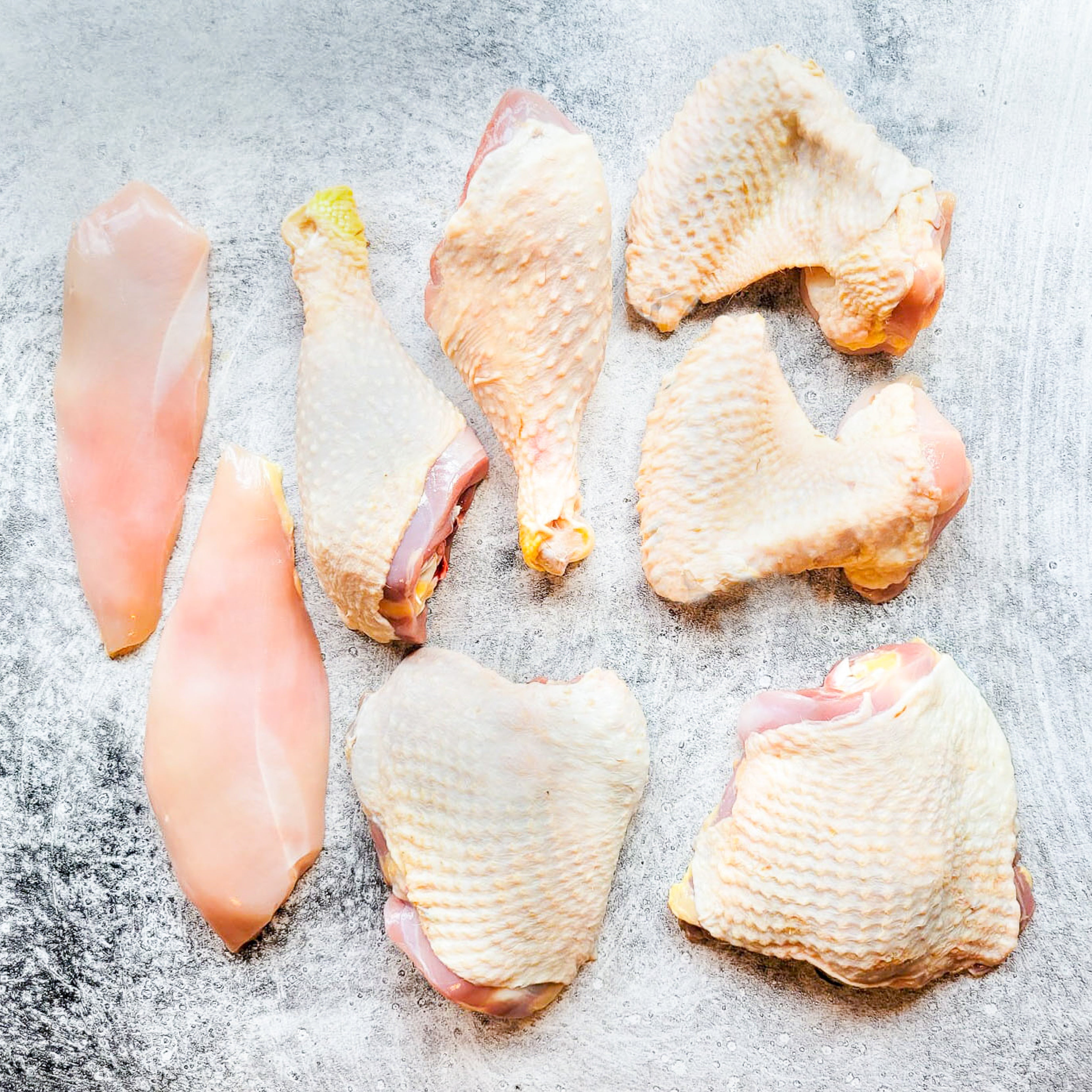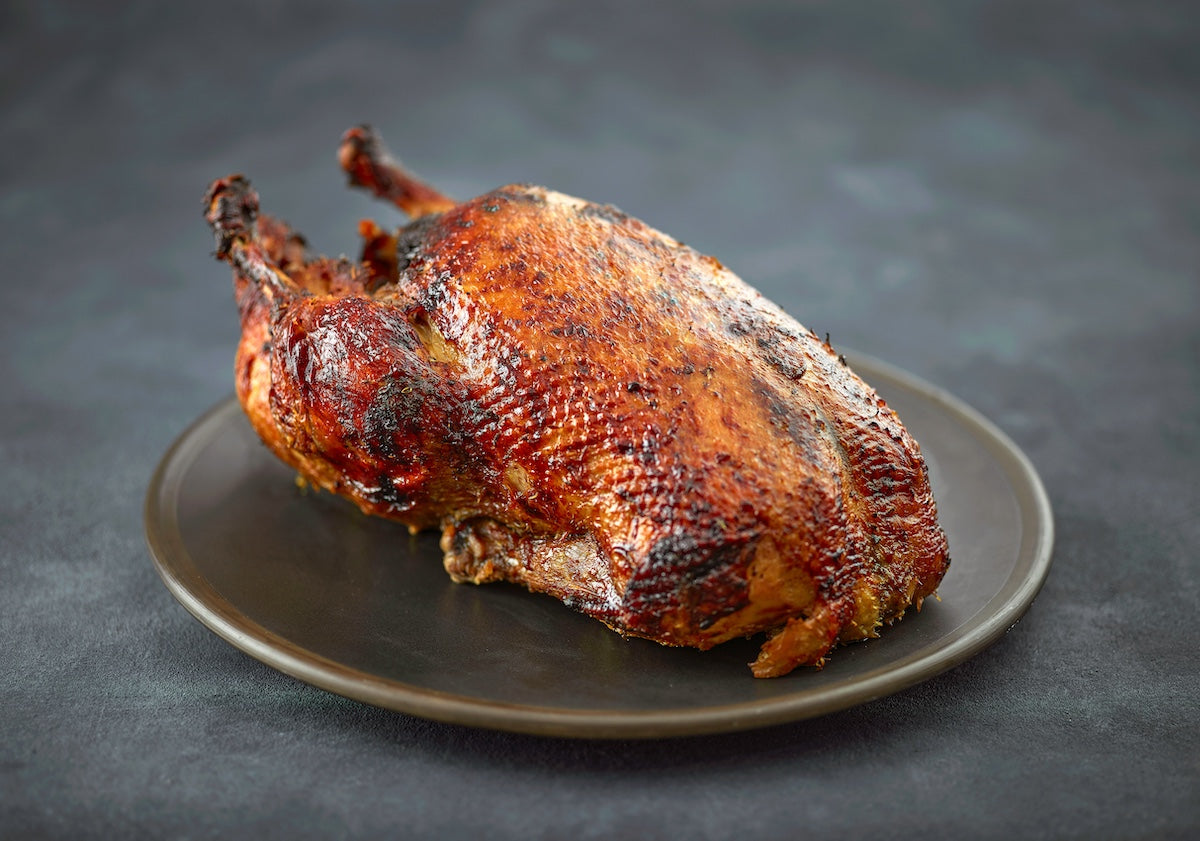
Simple Roast Duck
This recipe is designed to showcase the incredible flavor of Heritage Silver Appleyard duck while also allowing you to collect beautifully clean rendered kosher duck fat for later use.
With little more than salt, heat, and time, the skin becomes deeply crisp as the bird slowly releases its rich fat — leaving you with both an exceptional roast duck and a supply of one of the kitchen’s most prized cooking fats. When roasting a single duck, we were able to reserve nearly a quart of remarkable schmaltz, making this method a great guide for getting the most out of your purchase.
We also love Duck à l’Orange, so have included a variation for it at the end of this recipe.
Ingredients
-
Kosher salt & freshly ground black pepper
Instructions
Dry the duck (optional but recommended)
Remove the duck from its packaging the day before cooking and place it uncovered in the refrigerator for at least 8 hours or overnight. This helps dry the skin and encourages better crisping during roasting.
Preheat the oven
Preheat your oven to 350°F.
Season the duck
Season the duck inside and out with salt and freshly ground black pepper. Be careful not to oversalt, as kosher ducks are already salted during processing.
Prepare the roasting pan
Place the duck breast-side up on a V-rack set inside a roasting pan.
Remove the giblet bag and neck from the cavity. After disposing of the bag, place the neck and giblets in the bottom of the roasting pan.
Add water to the pan
Pour 1–2 inches of water into the bottom of the roasting pan. This prevents the rendered fat from scorching during the long roast.
Score the skin (optional)
If desired, lightly prick or score the skin, being careful not to cut into the meat. Some cooks believe this helps the fat render more efficiently and produces crisper skin, while others insist it makes little difference. The debate continues — and we’ll admit we haven’t fully made up our minds either.
Roast the duck
Place the duck in the oven and roast for about 25 minutes per pound, basting 3–4 times during cooking.
Crisp the skin
Increase the oven temperature to 450°F for the final 30 minutes to develop deeply crisp, golden skin.
Rest before carving
Remove the duck from the oven and allow it to rest 20 minutes before carving.
Saving the Duck Fat
One of the great rewards of roasting a duck is the rendered fat.
While the fat is still warm, pour it through a paper towel or cheesecloth into a clean container. Refrigerate the fat and allow it to solidify. Any remaining liquid will settle underneath the fat — simply lift the solid fat from the top and transfer it to another container. The remaining liquid can be added to soup/broth or discarded
Properly refrigerated duck fat will keep for several weeks or longer and is excellent for roasting potatoes, frying Latkes, high-heat cooking, and using in place of butter or margarine.
Duck à l’Orange Variation
Ingredients
-
3 oranges (2 zested)
-
1 head of garlic (peeled and crushed) + 2 cloves minced
-
Orange juice
-
Poultry stock
-
1 Tbsp freshly ground coriander seed
-
1 Tbsp whole black peppercorns
-
2-4 tablespoons cornstarch, potato starch, and/or flour (for thickening)
Instructions:
We love a well-made orange duck. Over the years, we’ve refined this recipe to strike the perfect balance of sweet and savory—where garlic and poultry stock add depth, and the oranges and coriander bring a bright, citrusy lift.
To begin, whisk the orange juice with cornstarch, potato starch, and/or flour, then set the mixture aside. Instead of adding water to the bottom of the roasting pan, use equal parts orange juice and poultry stock. Add the orange juice–starch mixture and whisk everything together until fully combined.
Zest two oranges and add half of the zest to the pan. Then add the minced garlic, ground coriander, and peppercorns.
Next, peel all three oranges and cut them into wedges. Stuff the cavity of the duck with the orange wedges and the crushed garlic cloves. Place the duck on a V-rack and season with salt, pepper, and the remaining orange zest.
Roast the duck following the Simple Roast Duck method above.
Once the duck is finished roasting, the pan dripping should be decently thickened, but if you'd like you can reduce the them further on the stovetop or in the oven. Add more flour or starch if needed to reach your desired consistency.
Spoon the glaze over the duck before serving, or serve it on the side.