Chosen Recipes

Two Ways to Roast a Duck
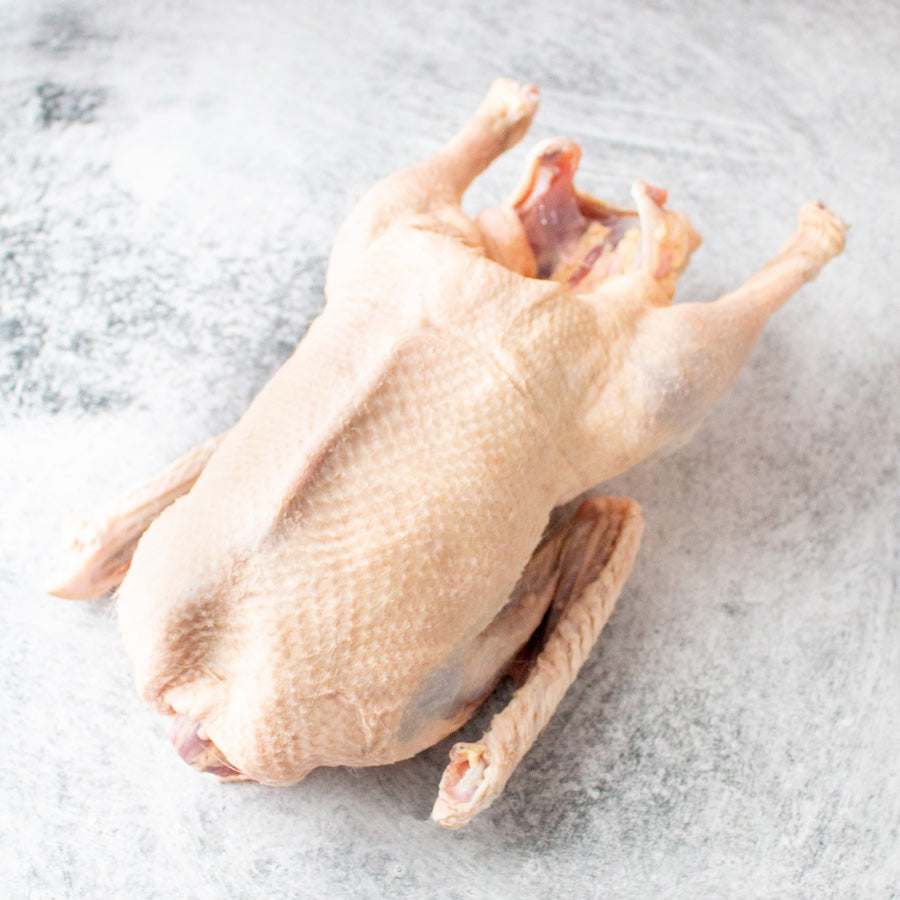
Simple Roast Duck This recipe is designed to showcase the incredible flavor of Heritage Silver Appleyard duck while also allowing you to collect beautifully clean rendered kosher duck fat for later use. With little more than salt, heat, and time, the skin becomes deeply crisp as the bird slowly releases its rich fat — leaving you with both an exceptional roast duck and a supply of one of the kitchen’s most prized cooking fats. When roasting a single duck, we were able to reserve nearly a quart of remarkable schmaltz, making this method a great guide for getting the most out of your purchase. We also love Duck à l’Orange, so have included a variation for it at the end of this recipe. Ingredients 1 Whole Heritage Duck Kosher salt & freshly ground black pepper Instructions Dry the duck (optional but recommended) Remove the duck from its packaging the day before cooking and place it uncovered in the refrigerator for at least 8 hours or overnight. This helps dry the skin and encourages better crisping during roasting. Preheat the oven Preheat your oven to 350°F. Season the duck Season the duck inside and out with salt and freshly ground black pepper. Be careful not to oversalt, as kosher ducks are already salted during processing. Prepare the roasting pan Place the duck breast-side up on a V-rack set inside a roasting pan. Remove the giblet bag and neck from the cavity. After disposing of the bag, place the neck and giblets in the bottom of the roasting pan. Add water to the pan Pour 1–2 inches of water into the bottom of the roasting pan. This prevents the rendered fat from scorching during the long roast. Score the skin (optional) If desired, lightly prick or score the skin, being careful not to cut into the meat. Some cooks believe this helps the fat render more efficiently and produces crisper skin, while others insist it makes little difference. The debate continues — and we’ll admit we haven’t fully made up our minds either. Roast the duck Place the duck in the oven and roast for about 25 minutes per pound, basting 3–4 times during cooking. Crisp the skin Increase the oven temperature to 450°F for the final 30 minutes to develop deeply crisp, golden skin. Rest before carving Remove the duck from the oven and allow it to rest 20 minutes before carving. Saving the Duck Fat One of the great rewards of roasting a duck is the rendered fat. While the fat is still warm, pour it through a paper towel or cheesecloth into a clean container. Refrigerate the fat and allow it to solidify. Any remaining liquid will settle underneath the fat — simply lift the solid fat from the top and transfer it to another container. The remaining liquid can be added to soup/broth or discarded Properly refrigerated duck fat will keep for several weeks or longer and is excellent for roasting potatoes, frying Latkes, high-heat cooking, and using in place of butter or margarine. Duck à l’Orange Variation Ingredients 3 oranges (2 zested) 1 head of garlic (peeled and crushed) + 2 cloves minced Orange juice Poultry stock 1 Tbsp freshly ground coriander seed 1 Tbsp whole black peppercorns 2-4 tablespoons cornstarch, potato starch, and/or flour (for thickening) Instructions: We love a well-made orange duck. Over the years, we’ve refined this recipe to strike the perfect balance of sweet and savory—where garlic and poultry stock add depth, and the oranges and coriander bring a bright, citrusy lift. To begin, whisk the orange juice with cornstarch, potato starch, and/or flour, then set the mixture aside. Instead of adding water to the bottom of the roasting pan, use equal parts orange juice and poultry stock. Add the orange juice–starch mixture and whisk everything together until fully combined. Zest two oranges and add half of the zest to the pan. Then add the minced garlic, ground coriander, and peppercorns. Next, peel all three oranges and cut them into wedges. Stuff the cavity of the duck with the orange wedges and the crushed garlic cloves. Place the duck on a V-rack and season with salt, pepper, and the remaining orange zest. Roast the duck following the Simple Roast Duck method above. Once the duck is finished roasting, the pan dripping should be decently thickened, but if you'd like you can reduce the them further on the stovetop or in the oven. Add more flour or starch if needed to reach your desired consistency. Spoon the glaze over the duck before serving, or serve it on the side.
Learn more
To Roast a Goose
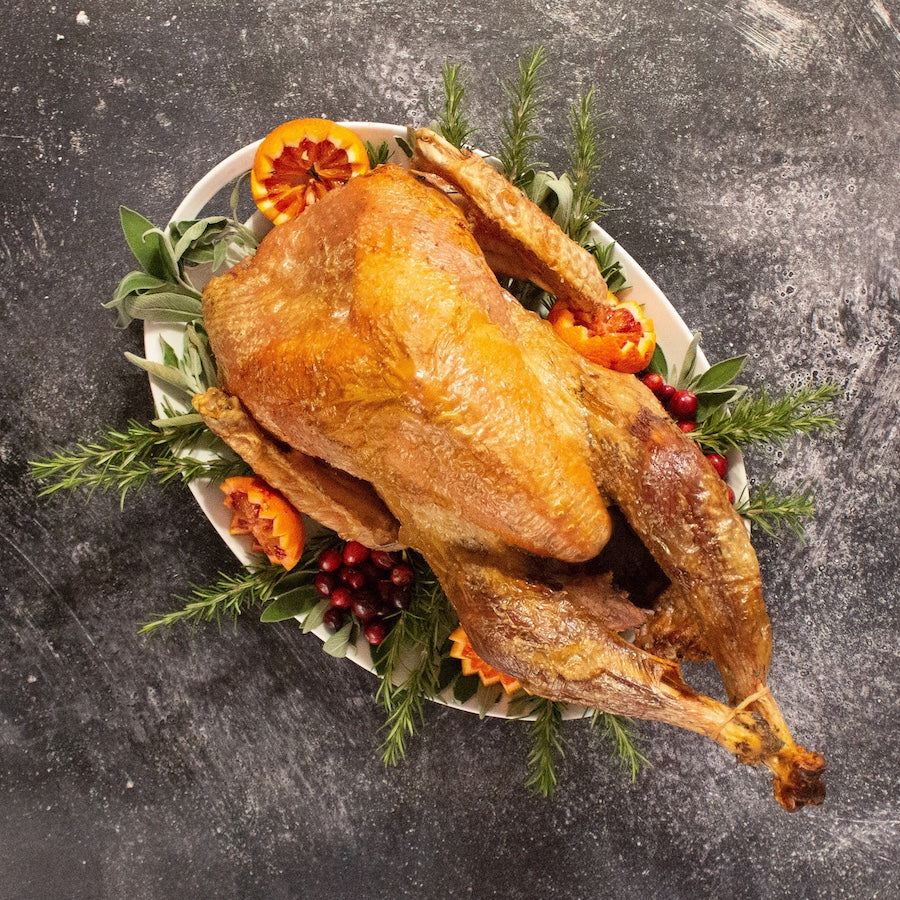
How to Roast Goose: A Step-by-Step Guide We, like many today, are relatively new to cooking goose. We’ve found it to be an incredibly luxurious, rich meat, with a depth of flavor unlike any other poultry. The sheer amount of fat it produces is impressive—and fun to work with. Goose meat has a little bite, so letting it rest properly and tenderizing when possible (for example, when cooking just the breast) always helps. It’s a rewarding culinary experience, and we’re still learning along the way. This recipe summarizes what we’ve discovered to help you enjoy this experience with clarity and confidence. Preparing Your Goose: Stuffed or Unstuffed First, decide whether you want to stuff your goose. A stuffed goose absorbs some of the rendered fat, producing a rich, flavorful stuffing that many people love. However, this reduces the amount of clean fat available for other uses. If your goal is to save the fat for Chanukah dishes, we recommend cooking the goose unstuffed. This recipe focuses on an unstuffed roast to produce the cleanest possible cooking fat. Traditional stuffing recipes are provided at the end for those who prefer a stuffed goose. Choose Your Cooking Method Method 1 — Dry Heat RoastThis method is perfect if you want crisp, golden skin and a classic roasted flavor. It’s simple and reliable, but the breast can cook faster and risk drying out if not carefully managed. The meat may also be slightly less tender than with a braising or steaming step. Method 2 — Braise or Steam, Then RoastThis approach produces exceptionally tender, juicy meat thanks to the gentle initial cooking phase. It’s forgiving and keeps the breast moist, but the skin won’t crisp as easily unless you finish at high heat. It also requires more steps and attention. Both methods yield excellent fat for rendering, so your choice can be based entirely on texture preference. For this recipe, we focus on dry roasting, but we’ll provide links to braising and steaming recipes at the end. Method 3 — Cut Up Your GooseThis is ideal for the more experienced cook who wants to treat each cut perfectly and isn't focused on having a centerpiece at the table. Debone the Goose Breasts, tenderize, and prick the skin. Cook them medium-rare or medium using a forward or reverse sear. You can confit, dry roast, or braise the Goose Legs. Trim all the leftover Goose Fat and Goose Skin to make shmaltz and gribbenes. Use the remaining Goose Bones, Goose Gizzard, Goose Heart, and other trimmings to make an exceptional goose stock. Step-by-Step Goose Roasting Instructions 1. Preheat your ovenSet your oven to 350°F. 2. Prepare the gooseRemove the giblets and neck.If desired, remove excess cavity fat and render it separately—ideal for making gribbinis or cracklings. If you plan to stuff the bird, you can reserve this extra fat and skin to cover your stuffing. 3. Prick the skinUsing a skewer, fork, or thermometer probe, prick the skin all over—front, sides, and back—being careful not to pierce the meat. This helps fat render and ensures crispy skin. 4. Truss the gooseTrussing helps the bird cook evenly and makes it easier to handle when flipping. 5. Season and set up your roasting panRub the goose with a thin layer of fat, salt, and pepper.Place the bird on a V-rack inside a roasting pan. Add about 1 inch of water or stock to the pan, and place the neck and giblets in the liquid. Make sure the pan never dries out during cooking. Cooking Timeline Roast the goose at 350°F for 15–20 minutes per pound. If your oven has convection, turn it on for extra crisping. First 1/3 of cooking time: Roast breast-side up. Next 1/3: Flip the bird breast-side down to keep the breast moist and encourage even fat rendering. Final 1/3: Flip breast-side up again to finish. If the skin isn’t crisping well—especially on smaller birds—raise the heat to 400°F during the final stage. Resting, Carving & Stock Once done, let the goose rest for 20 minutes before carving.The giblets may be eaten or reserved for a giblet gravy. The neck can be eaten or added to the frame to make a rich goose stock or soup. Rendering & Storing the Fat Pour the roasting pan contents through a fine mesh strainer lined with cheesecloth or paper towels into a heat-safe bowl. Refrigerate until fully chilled. Once cooled, the pure white fat will solidify on top, with water or impurities settling at the bottom. Lift off the fat and store it in a jar or airtight container in the fridge. This rendered goose fat is perfect for frying potatoes, roasting vegetables, or using as a flavorful substitute for oil in other dishes. The liquid underneath can be used for sauces or soups, or discarded if desired. Old Jewish cookbooks with numerous Goose Recipes within The International Jewish Cook Book - A Modern "Kosher" Cook Book The Jewish Holiday Cook Cook, Leah Leonard - available used and for free viewing through the Internet Archive Traditional Goose Stuffing Recipes (James Beard) Roast Goose with Prunes and Apples — a classic James Beard goose stuffing featuring prunes and apples. Christmas Goose and Stuffing — bread crumbs, apples, chestnuts, prunes, thyme, and nutmeg. Brioche Stuffing — a bread-based alternative adaptable to poultry. James Beard's classic book Fowl and Game Cookery has many helpful recipes for cooking Goose and other heritage birds. You can find it through amazon and other sellers or in the online internet archive. Additional Recipes for Steamed or Braised Start Steamed Start Goose — works well for rendering clean fat to use in other dishes. Braised Holiday Goose — produces super tender, juicy meat, but is less ideal for reserving rendered fat.
Learn more
How to Roast a Heritage Turkey
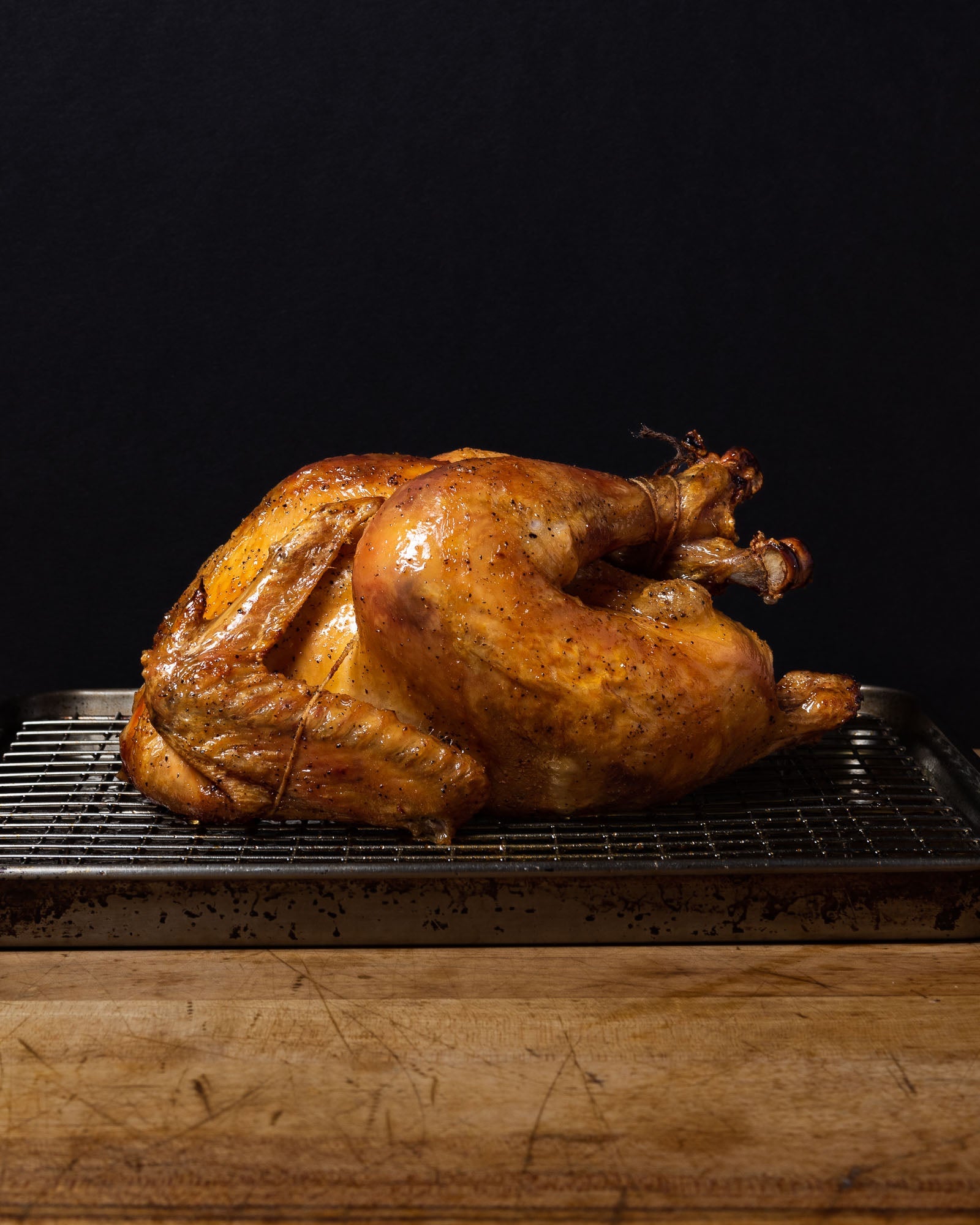
The recipe below only outlines the recommended roasting method for our heritage turkeys. For full details—including required equipment, gravy recipe, and more—download our full Heritage Turkey Insert. Prep Time: 30 Minutes Cook Time: 10-15 min per lb Serves: ~1lb of raw bone-in turkey per person Ingredients One whole “Chosen Turkey” - Patted dry, trussed Shmaltz or Olive Oil Salt & Pepper to taste Fresh Herbs (optional) Cooking Instructions: Preheat the oven to 325°F. Check the bird’s cavity for the neck and giblets, and remove them if present. Place the turkey on the rack of a roasting pan and pat it dry with a paper towel before trussing the legs. Rub the bird all over with schmaltz or oil. Season with salt, pepper, and herbs if using. The neck can be cooked either inside or outside the bird, in the drippings, or reserved for making poultry soup or stock. Giblets should not be roasted dry; instead, reserve them for soup/stock or cook them in the bottom of the pan with the drippings. Pour about an inch of water into the bottom of the roasting pan to prevent the drippings from burning. Be sure to check and maintain the liquid level throughout cooking. Insert a meat thermometer into the thickest part of the breast. Roast the turkey at 325°F, basting every 30 minutes. Depending on your oven, you may need to rotate the bird halfway through for even cooking. The turkey is done when the breast reaches 165°F. To avoid overcooking pull the bird out at 155-160°F and allow it to finish reaching temp outside the oven. While we recommend relying on internal temperature rather than time when cooking turkeys, a general guideline is 10–15 minutes per pound at 325°F. Let the turkey rest for 20 minutes before carving to allow the juices to redistribute. Serve and enjoy!
Learn more
The Chosen Chicken Soup
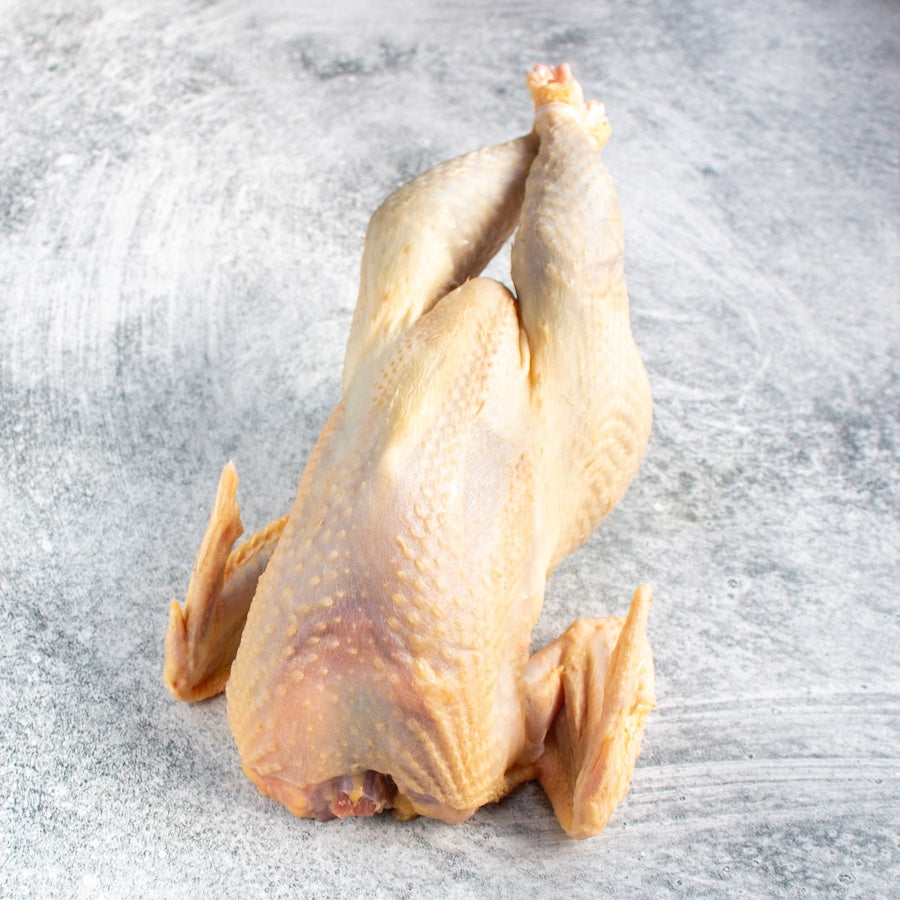
Download Full Recipe Prep Time: 30-60 Minutes Cook Time: 2-8 Hours Serves: 4-8+ people Back in the day everyone knew that the key to a great chicken soup was using an older bird. Heritage broilers and fryers are 2-3 times the age of today’s industrial chickens and our Stewing Fowl are 10-20+ times older. This, along with our outstanding genetics adds heaps of flavor while their well-developed meat can stand up to the long cooking process a soup requires. This is why our chickens will make a great broth that’s more flavorful and delicious than any other. The Chosen Poultry Stock For the richest possible soup, we recommend adding stock, a concentrated broth using both bones and feet to develop a taste that’s even better. Along with the flavor, the collagen and gelatin that breaks down while cooking delivers incredible health-promoting nutrients. IngredientsChicken/Turkey Bones• 4 lbs Heritage Chicken or Turkey Bones or Heritage Turkey Wings• 2 lbs Heritage Chicken Feet• 2 lbs Heritage Chicken or Turkey Necks• 2 gallons waterMirepoix• 2 large onions (halved with skin on)• 2 large carrots (halved with skin on)• 4 stalks celery (halved with leaves on)Aromatics• Black pepper• Bay leaves• Parsley stems Cooking InstructionsAdd bones, feet, and necks to an 8 qt stockpot. Cover bones with water and gently bring to a simmer. Allow stock to lightly simmer for 30-60 minutes, skimming impurities and fat as necessary. Add carrot, celery, and onion as well as aromatics to the stock and fill the rest of the way with water. Cover and allow to simmer for 4-8 hours. Do not allow stock to come to a boil as this can result in a cloudy broth. Strain stock through a mesh strainer lined with cheesecloth and cool immediately. The Chosen Chicken Soup Ingredients• 3–4 lbs of Heritage Chicken — whole birds, drums, thighs, or leg quarters ◦ Add 1–2 lbs of chicken or turkey bones, neck, or wings ◦ Or use 3–4 lbs of Heritage Stew Fowl Chicken without added bones• 1 qt heritage poultry stock (optional)• 2–3 Heritage Chicken Feet (recommended)• 2 large carrots (peeled and chopped)• 2 onions (quartered)• 4 stalks celery (chopped)• salt & pepper to taste• Chicken or Turkey Gizzards (optional) Cooking InstructionsWhen Using Heritage Chicken – Place all meat, bones, and feet in a soup pot and cover with water. Bring to a simmer, skimming surface regularly. Add all other ingredients, cover pot, and allow to simmer lightly for about 1.5–3 hours. When Using Heritage Stewing Fowl – Place your fowl and feet in a soup pot and cover with water. Bring to a low simmer and skim surface regularly for 2–3 hours. Once the chicken begins to soften, add the rest of the ingredients, cover, and cook for another 1–5 hours. Cooking times can vary greatly with Stewing Fowl, depending on size and age. If the bird is at all tough, keep cooking. The meat should be tender and falling off the bone when fully cooked.
Learn more
How to Roast a Heritage Chicken
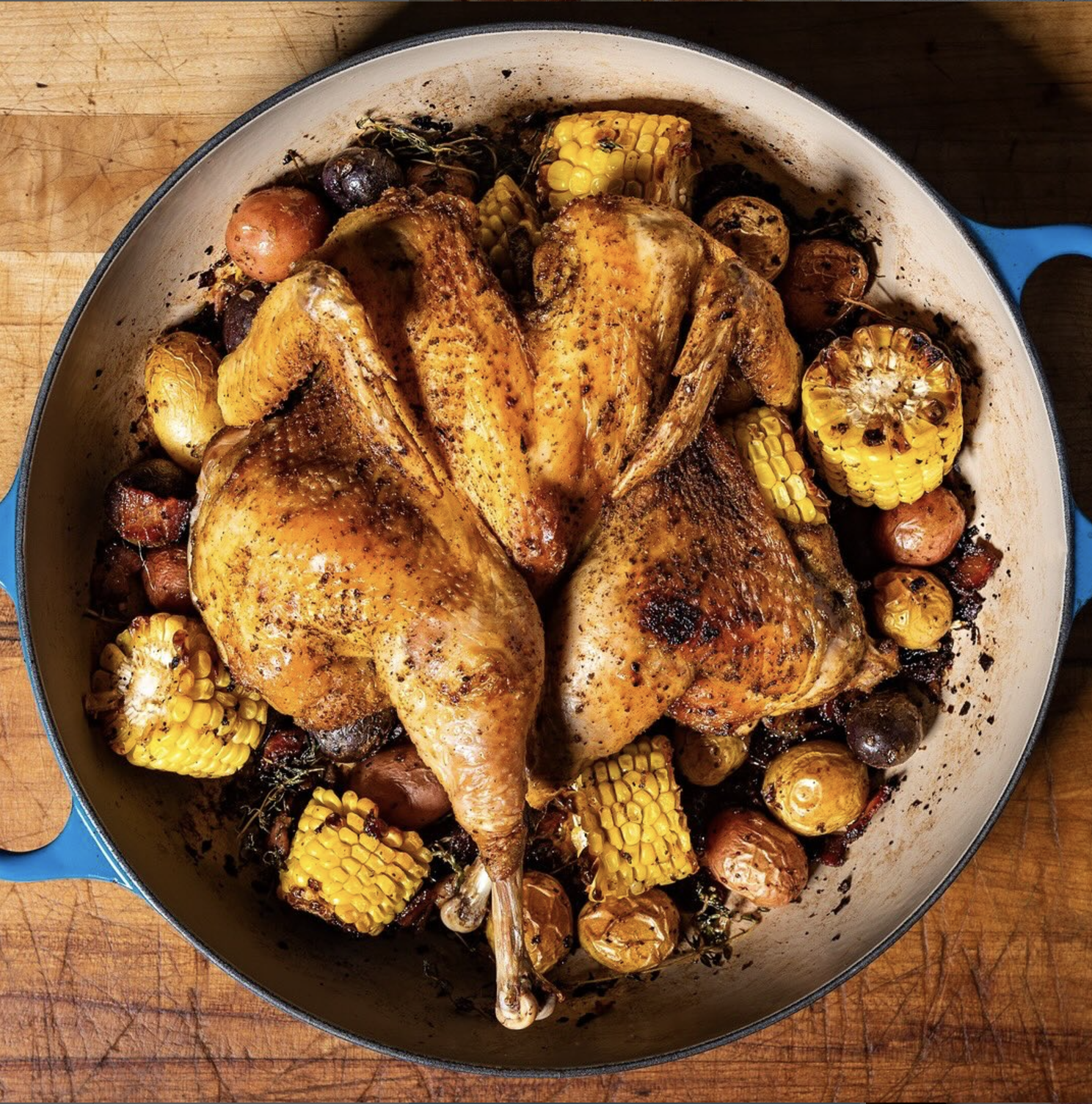
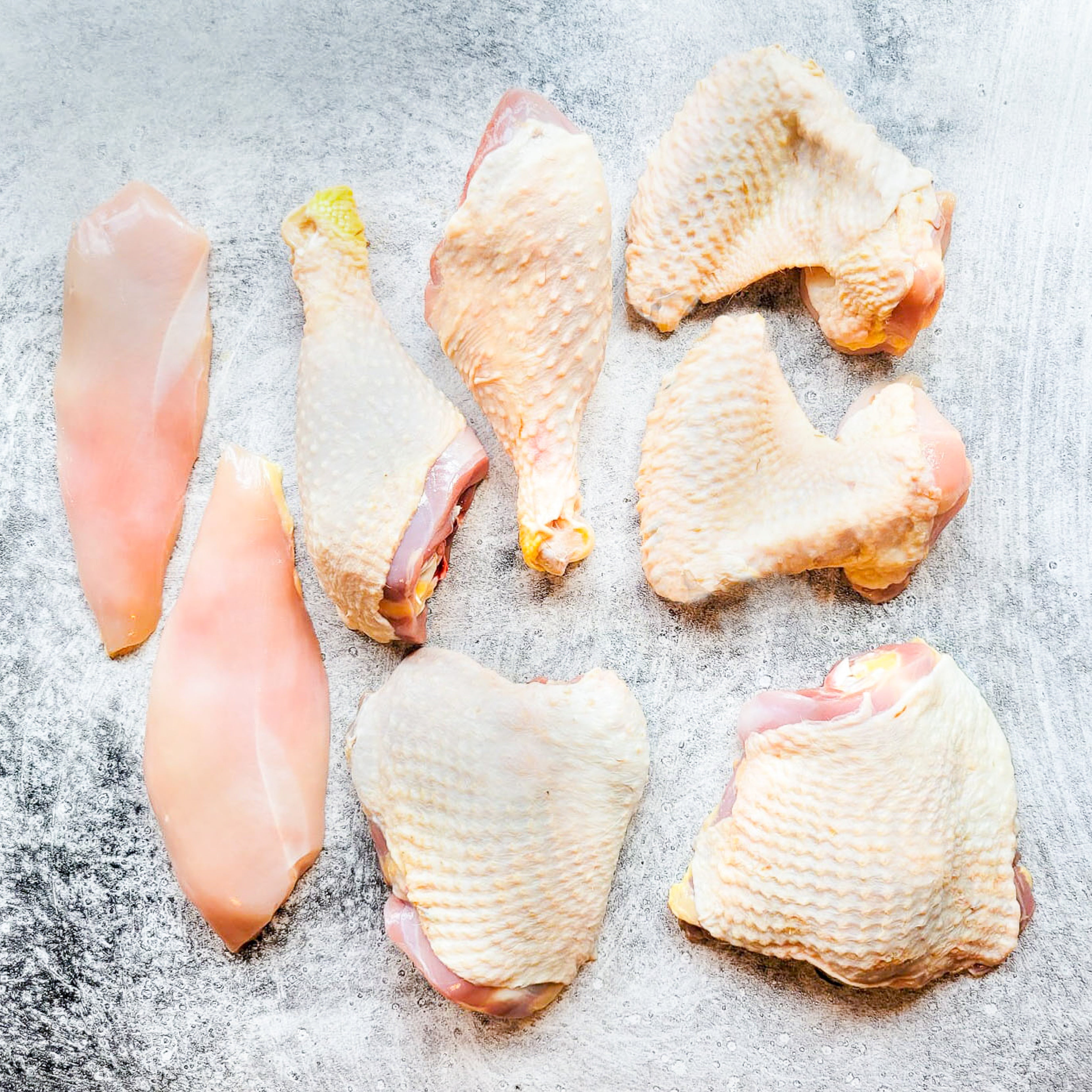
Download Full Recipe Prep Time: 5 Minutes Cook Time: 30-90 Min Serves: 2-4 per chicken When it comes to heritage chicken, simple is best. Ditch the powders, spice blends, sauces, and condiments—a good piece of meat needs three things: salt, pepper, and fat. This recipe highlights the incredible chicken flavor that leaves our customers saying, “I feel like I just ate real chicken for the first time.” Ingredients Heritage Broiler or Fryer Chicken (or chicken parts of your choice) Heritage Chicken or Turkey Shmaltz or olive oil kosher salt and fresh cracked black pepper, to taste Cooking Instructions Preheat the oven to 375°F. Place the chicken in a roasting pan and coat it with fat or oil, making sure to cover the entire bird. Sprinkle lightly with salt (kosher meat is pre-salted, so use sparingly) and pepper. Roast whole birds for 12–15 minutes per lb. Raise oven temp to 475°F and brown for another 20–30 minutes. Let rest for 10 minutes before carving. Serve and enjoy chicken like never before! Timing for Part Legs: Roast 20–30 minutes at 375°F, then brown at 475°F for 20–30 minutes. Bone-in Breasts: Roast 10 minutes at 375°F, then brown at 475°F for 20–30 minutes. Whole Cut-Ups: Start with the Legs and thighs. Add breast and wings for the final 10 minutes at 375°F, then brown at 475°F for 20–30 minutes.
Learn more